What Five Lost Students Taught Me About Honest Mentorship
 Tanishq Jain AI Builder & Startup Operator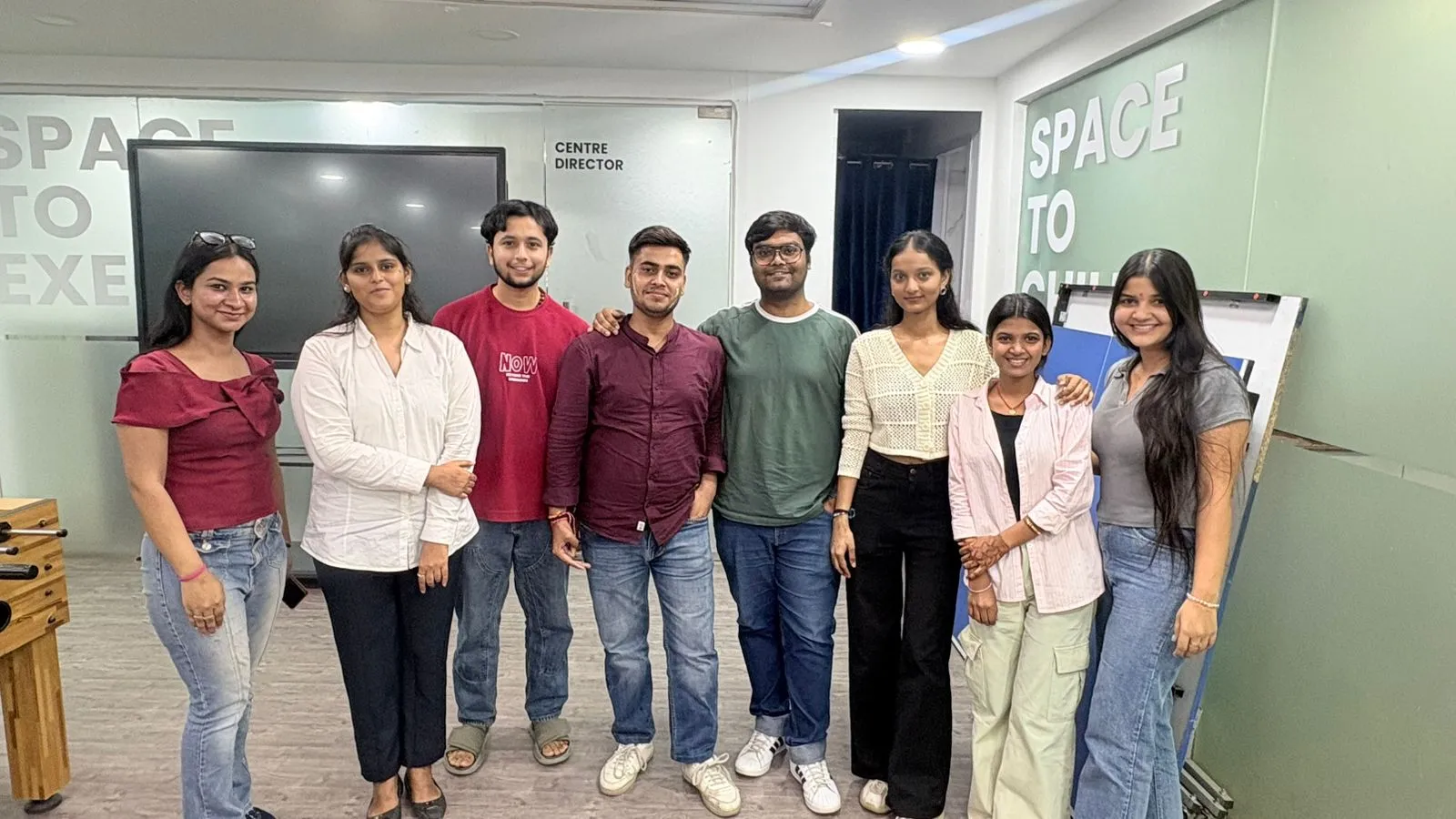
The morning of 24th August 2026, Shivam Ahuja assigned me five trainees from SkillCircle’s data science batch. Eleven months of curriculum, two weeks left. I was genuinely excited. My first batch, my first real shot at teaching what I actually do at work, not the sanitised version you put in a slide deck.
That excitement lasted about twenty minutes.
What the Counsellor Sold Them
As I went around the room doing introductions, a pattern emerged that I could not ignore.
Akash Shukla, B.A. from open schooling. Why data science with a non-tech background? “The AI market is growing and the counsellor at SkillCircle said this programme will get me a good job.” Word for word, almost.
Sagar Sharma, B.A., last semester still running. Same answer.
Aqsa Khan, prepared for UPSC from 2020 to 2025, then enrolled. Same answer.
Neetu Yadav, the weakest in the group technically. Same answer.
Chaitanya Tanwar, second-year BCA student, the only one with any computer science exposure. Same answer.
I asked all five together: who had an interest in coding or mathematics before joining? Not a single hand went up.
That is when the mixed emotion hit. Not frustration at the students. Something closer to anger on their behalf. Someone sold a deeply technical course, one that assumes comfort with Python, statistics, linear algebra, NumPy, Pandas, to five people who had none of those foundations and no pre-existing pull towards any of it. A counsellor’s commission target had quietly shaped five people’s career decisions. That is not fair. I felt it clearly, and I still do.
The Two Options I Had
I could have done what was easy. Given them some library exercises, told them to practise Pandas, wished them luck in their final two weeks, and moved on. Nobody would have questioned it. They were not ready for any live project work, objectively.
I did not do that.
Day one, I showed them what was actually possible. I asked them how long they thought it takes to build and deploy a website on the internet. They all said days, maybe a week. Within half an hour, using Google Stitch, Antigravity, and Vercel, every one of them had a personal website live on the internet. By the end of that session, the room felt different. They were engaged in a way they had not been at the start.
Day two through four, I gave them a fake SkillCircle dataset and told them to analyse it and prepare a report. The rule was simple: use AI as much as you want, but at the end, you must be able to explain every line of code and every number in the report. They struggled. They found out, concretely, exactly where they stood in relation to what the curriculum expected of them.
That struggle was the point. I needed them to see their own position clearly, not because I wanted them to feel bad, but because you cannot fix a problem you have not acknowledged.
The Rajput Analogy My Father Used to Tell Me
When all five were sitting there feeling demotivated, a little guilty, quietly processing the gap between where they were and where they thought they should be, I told them something I meant genuinely.
Coming from a non-tech background into data science is genuinely hard. Not “challenging in a motivational-poster way” hard. Actually hard. The fundamentals do not come easily when you have no prior frame of reference for how a for-loop works or why a matrix multiplication matters. That is real, and pretending otherwise would have been a disservice.
But I also told them about something my father used to say, drawing on the Rajput tradition of going into battle treating it as do-or-die, not give-up. When you enter a war knowing retreat is not the plan, your relationship with the difficulty changes. You stop looking for the exit and start looking for the path through.
I had applied the same frame in my own CAT preparation. It is not a philosophy I invented. It is one I inherited and tested.
The lesson I gave them: this course, this field, this choice they made, it is now a war in that sense. Either you work with consistency and genuine effort and build something real, or you watch yourself fall behind people who started with more natural affinity for the material. There is no comfortable middle path here.
I was not trying to demotivate anyone. I was trying to open their eyes. That is the only honest thing I know how to do.
What I Actually Taught Them to Do
After the honest conversation, I gave them a practical system.
We set up service accounts on Google Cloud Console, enabled the Sheets API and Docs API, connected OpenRouter so they had access to free AI models without burning money, and then configured Claude Code’s CLI extension in Antigravity to authenticate via the service account JSON credentials. The result: share a dataset with Claude Code, describe what you want to analyse or build, and it executes, explains, and teaches as it goes.
Days of analysis work, done in minutes. All five were visibly amazed. More importantly, they had a system they could keep using on their own, at zero cost, to practise and build projects consistently.
The principle here is straightforward: AI does not replace the need to understand your field, but it dramatically lowers the cost of practise. You can iterate faster, see outputs immediately, and learn from working code rather than from struggling in isolation. For students with a non-tech background trying to close a large gap quickly, that difference matters enormously.
What I Learned About Mentorship
This was my first batch of trainees and I will remember all five of them.
What impressed me was that they all showed up, every day, for the full duration. Showing up is not sufficient on its own, I told them that plainly. But it does signal something real: they care about where their careers go. That matters. You can build on that.
The thing I keep thinking about is how easy it would have been to let them leave with a false sense of readiness. A few comfortable exercises, some encouraging words, a pat on the back. Two weeks, done. But if I had done that, I would have added another layer to the problem the counsellor already created. The honest, occasionally harsh conversation is the more caring one. I believe that.
Their training is over now. I told them I am always available, one message away, for any question. I meant it. What happens next is on them. But if they do the work consistently and use the tools I showed them, they will get through.
I hope they prove me right. I will be genuinely glad when they do.
Related reading: How I Evaluate Early-Stage Startups Navigating the Startup Hustle
Tanishq Jain
I build AI-powered websites, automations, and workflows, and I work with founders across India's startup ecosystem. Founder of Klixo Studio; working with Delhi Angels.